
Innovative Light Fixtures to Transform Your Home Decor
A room can have the right sofa, the perfect paint color, and a beautiful rug, yet still feel unfinished. Often, the missing piece is overhead, on the wall, or tucked beside a chair. Light fixtures do more than help you see. They shape the mood, guide the eye, and give a room its character.
The right fixture can make a dining room feel intimate, turn a hallway into a design moment, or give a bedroom a calm, hotel-like glow. Even better, you do not need a full renovation to make a noticeable change. Swapping a basic ceiling light for a sculptural pendant, adding vintage sconces, or customizing a simple shade can shift the whole feeling of your home.

Light fixtures set the tone before anything else does
Lighting affects how color, texture, and scale read in a room. A white wall can look crisp in bright daylight, creamy under a warm bulb, or flat under a harsh fixture. A velvet chair can look rich with side lighting and dull under a single overhead light. That is why fixtures matter as much as the bulbs inside them.
Think of lighting in three layers:
Ambient light The general light that fills a room, often from ceiling fixtures, recessed lights, or large pendants.
Task light Focused light for reading, cooking, grooming, working, or any activity that needs clarity.
Accent light Decorative or directional light that highlights art, shelves, plants, architectural details, or texture.
A room feels best when these layers work together. One bright ceiling fixture rarely creates comfort on its own. It may light the space, but it does not create depth. A pendant plus sconces plus a small lamp can make the same square footage feel softer, richer, and more useful.
Dimmers also make a big difference. A dining pendant that feels too bright during dinner may be perfect for puzzles, homework, or cleaning. With a dimmer, the same fixture can serve several moods throughout the day.
Modern fixtures bring clean lines and sculptural shape
Modern lighting works well when you want a room to feel fresh, calm, and uncluttered. It often uses simple shapes, crisp lines, and materials such as glass, matte black metal, brushed brass, chrome, or plaster.
A modern fixture does not have to fade into the background. Some of the best examples act like quiet sculpture. Picture a globe pendant over a breakfast nook, a linear chandelier above a dining table, or a slim LED bar above a floating vanity. These pieces feel current without making the room look cold.
For a modern look, focus on proportion. A tiny pendant over a large island can feel lost. A big drum shade in a narrow hallway can feel crowded. Modern fixtures usually rely on shape more than ornament, so scale carries extra weight.
Good modern lighting ideas include:
A cluster of frosted glass globes in an entryway
A black linear chandelier over a rectangular dining table
Minimal cone pendants above a kitchen island
A plaster flush mount in a low-ceiling bedroom
Slim picture lights over built-in shelves
Modern rooms often benefit from warm bulbs. Cool, blue-toned light can make sleek spaces feel sterile. Warm white light gives clean lines a softer edge and makes wood, fabric, and art feel more inviting.
Vintage fixtures add history and charm
Vintage lighting brings a sense of age, craft, and personality. It can soften a new home or add character to a space that feels too plain. You might choose a milk glass schoolhouse light, a brass sconce with a pleated shade, a crystal chandelier, a ceramic table lamp, or a lantern-style pendant.
The beauty of vintage style is that it does not need to be perfect. A little patina on brass, slight variation in glass, or an unusual shade shape can make a fixture feel collected rather than staged.
To keep vintage lighting from feeling dated, pair it with cleaner surroundings. A traditional chandelier can look stunning over a simple wood dining table. A pair of antique-inspired sconces can feel fresh beside a modern mirror. The contrast is what makes the room interesting.
When shopping for actual vintage fixtures, safety matters. Old wiring may need professional attention before use. If you love the shape but not the risk, look for new fixtures inspired by vintage designs. Many brands now offer updated versions with modern wiring, standard bulb bases, and safer mounting.
Best rooms for vintage-inspired lights include:
Powder rooms, where a decorative sconce can make a small space memorable
Bedrooms, where fabric shades and brass finishes create softness
Dining rooms, where a chandelier can become the main design feature
Hallways, where lanterns or flush mounts add charm without taking up floor space
Industrial lighting makes a room feel grounded
Industrial lighting draws from factories, workshops, warehouses, and utilitarian design. It often includes metal shades, exposed bulbs, cages, pulleys, black finishes, aged steel, and raw textures.
This style works especially well in homes with brick, concrete, reclaimed wood, or open shelving. It can also add contrast to softer rooms. A black metal pendant over a white kitchen island can keep the space from feeling too sweet. A cage sconce beside a bed can bring structure to a relaxed room.
The trick is restraint. Too many industrial fixtures in one home can look themed. Choose one or two strong pieces, then balance them with warmer materials. Wood, linen, leather, and plants help industrial lighting feel livable.
Try these ideas:
Black metal pendants over a kitchen island
Gooseneck sconces above open shelves
A caged flush mount in a mudroom or laundry room
An adjustable arm wall light by a reading chair
A metal dome pendant over a casual dining table
If you use exposed bulbs, choose them carefully. Clear bulbs can create glare, especially at eye level. Frosted or lower-lumen bulbs often feel more comfortable while still keeping the industrial look.
Statement fixtures work best when the room gives them space
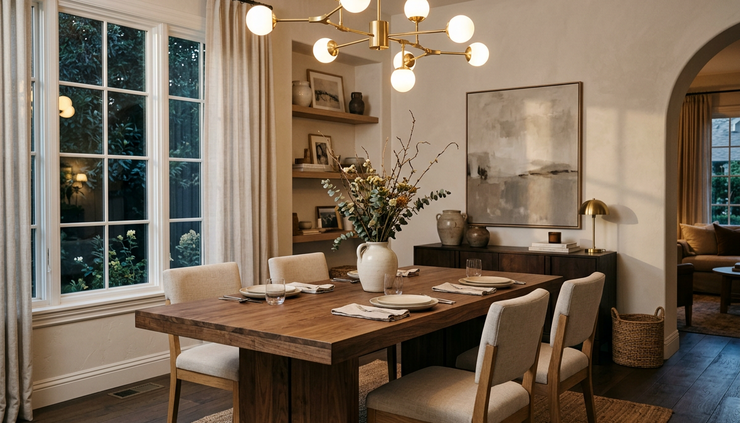
Some fixtures are meant to be noticed. A sculptural chandelier, oversized woven pendant, colorful glass globe, or branching ceiling light can act like art. These pieces are ideal for rooms that need a focal point.
A statement light usually works best when the surrounding elements are calm. If the rug, wallpaper, art, and fixture all compete, the room can feel busy. Let one piece lead. If the fixture has a bold shape, keep nearby finishes simple. If the fixture has color, repeat that color once or twice in smaller accents.
Statement lighting is especially effective in:
Foyers with tall ceilings
Dining rooms with a centered table
Stairwells with vertical space
Living rooms with simple furniture
Bedrooms with minimal wall decor
Size matters here. For dining rooms, a chandelier should feel generous but not overpower the table. For a foyer, consider both the ceiling height and the view from nearby rooms. A fixture can look beautiful up close but awkward from the second floor or front door if the scale is off.
Choose fixtures by room, not just by style
A beautiful fixture still needs to suit the room’s job. Before choosing one, think about what happens in the space, where people sit or stand, and how much flexibility the room needs.
Room | Fixture ideas | What to keep in mind |
Entryway | Pendant, lantern, flush mount, sculptural chandelier | Choose a fixture that makes a strong first impression without blocking the door swing or sightlines. |
Living room | Ceiling light, floor lamps, table lamps, wall sconces | Layer light so the room works for conversation, reading, TV, and relaxed evenings. |
Kitchen | Island pendants, recessed lights, under-cabinet lights | Use task lighting where you chop, cook, and clean. Avoid fixtures that cast shadows on counters. |
Dining room | Chandelier, linear pendant, shaded pendant | Center the fixture over the table, not always the room, especially in open layouts. |
Bedroom | Flush mount, bedside sconces, pendants, lamps | Keep the light soft and adjustable. Bedside lighting should be easy to reach. |
Bathroom | Vanity sconces, ceiling fixture, damp-rated lights | Place light near face level when possible to reduce harsh shadows. Check ratings for moisture. |
Hallway | Flush mounts, small pendants, picture lights, sconces | Repeat fixtures for rhythm, but keep clearance comfortable. |
Home office | Desk lamp, overhead light, wall-mounted task light | Reduce glare on screens and place task light where it supports focus. |
A practical rule is to balance beauty with maintenance. A crystal chandelier may be lovely, but it needs cleaning. A fabric shade can soften a bedroom, but it may not suit a steamy bathroom. A large open pendant can look airy, but it may show dust faster than a closed shade.
Lighting changes ambiance, energy, and mood
Light has a direct effect on how a space feels. Bright, even light can help with cooking, cleaning, and detail work. Softer light can signal rest. Pools of light from lamps and sconces make a room feel more intimate than one overhead source.
Color temperature plays a major role. In most homes, warm white bulbs create a comfortable glow. They suit living rooms, bedrooms, dining rooms, and other places where relaxation matters. Brighter neutral light often works better in kitchens, bathrooms, closets, garages, and laundry rooms.
A few shifts can change a room quickly:
Use warm bulbs in spaces where you relax.
Add dimmers to overhead fixtures in dining rooms, bedrooms, and living areas.
Place lamps at different heights to create depth.
Use accent lights to highlight art, bookshelves, stone, tile, or plants.
Avoid bare bright bulbs where people sit or look directly toward the fixture.
Think about shadow, too. Shadows are not always bad. They give a room shape. A wall sconce that washes light upward can make a ceiling feel taller. A pendant with a perforated shade can cast delicate patterns. A table lamp beside a textured wall can make the surface feel richer.
The goal is not maximum brightness. The goal is the right brightness in the right place.
Mix finishes without making the room feel random
Many homes already have several metal finishes. Door hardware may be satin nickel, faucets may be chrome, and furniture may include brass or black metal. You do not need every fixture to match. A mixed-metal room often feels more natural.
The key is repetition. If you bring in a brass chandelier, repeat brass somewhere else, such as a mirror frame, cabinet knob, picture frame, or lamp base. If you use black sconces, echo black in curtain rods, chair legs, or artwork.
A simple mix might look like this:
Warm mix
Brass, bronze, cream shades, warm wood
High-contrast mix
Matte black, white glass, oak, leather
Cool mix
Chrome, nickel, frosted glass, pale stone
Soft vintage mix
Aged brass, milk glass, pleated fabric, painted wood
If you feel unsure, choose one dominant finish and one accent finish. For example, use black as the main finish in a kitchen, then add a small amount of brass through pendants or sconces. That gives the space variety without visual clutter.
DIY ideas can make simple fixtures feel personal
Customizing a fixture is one of the most satisfying home projects because even small changes show up right away. You can refresh what you already own or personalize a budget-friendly find.
Start with projects that do not alter electrical wiring:
Paint a metal shade Use a spray paint made for metal and choose a finish that suits the room, such as matte black, soft white, bronze, or muted green.
Swap a basic shade A pleated fabric shade, woven rattan shade, or glass globe can change the whole personality of a lamp or sconce.
Add a ceiling medallion A simple medallion can make a pendant or chandelier feel more finished, especially in dining rooms and bedrooms.
Wrap a cord A visible pendant cord can look more intentional when covered with fabric cord wrap or a clean cord cover.
Use decorative bulbs with care A globe bulb or gentle Edison-style bulb can add style, but keep the brightness comfortable.
Refresh a thrifted lamp Clean the base, replace the shade, and add a new finial. These small updates can make an old lamp look custom.
For more creative projects, consider a woven basket pendant, a painted ceramic lamp base, or a simple wood bead accent on a chandelier. Always keep heat and clearance in mind. Materials near bulbs should be safe for lighting use.
For anything involving wiring, mounting a heavy fixture, or working near moisture, hire a licensed electrician. A great-looking light should also be safe and secure.

Small upgrades can make the biggest difference
You do not have to replace every fixture at once. Start with the rooms where lighting affects daily life the most. A dark kitchen, a harsh bathroom, or a bedroom with only one overhead bulb will benefit quickly from better fixtures and bulbs.
If you want a simple plan, try this order:
Fix the problem areas first, such as dim counters or glare-heavy bathrooms.
Add dimmers where mood matters.
Replace one builder-basic fixture with a piece that reflects your style.
Add lamps or sconces to create layers.
Fine-tune bulbs so the color and brightness feel right.
This approach keeps the process manageable. It also lets your home develop a more collected look over time.
When choosing your next fixture, ask three questions:
Does it support what happens in this room?
Does it add the mood I want?
Does it relate to at least one other material, shape, or finish nearby?
If the answer is yes, you are likely choosing well.
Let lighting become part of the design
Light fixtures are often treated as finishing touches, but they have the power to shape the entire room. A modern pendant can make a kitchen feel crisp. A vintage sconce can warm up a hallway. An industrial light can add structure to a casual space. A handmade shade or painted fixture can make a room feel personal.
The best lighting choices blend function with feeling. They help you cook, read, gather, unwind, and move through your home with ease. Start with one fixture, one room, or one mood you want to improve. Once the light feels right, the rest of the space often comes together.


Comments